
This time both stories are about when to start. One is a large follow-up study in which the people who began rehabilitation soon after diagnosis lived longer. The other found that changes were already under way in the brain years before hallucinations actually appeared. Between them, they give reason to rethink the familiar approach of responding once a symptom has got worse.
People who started rehabilitation within a year of diagnosis lived longer
🔍 How this came about
A study published in the journal npj Parkinson’s Disease followed a nationwide cohort of 19,153 people with Parkinson’s in South Korea for up to 15 years, drawing on national health insurance records. The researchers sorted them into three groups by when rehabilitation began — within a year of diagnosis (32.2%), between one and two years (13.5%), and more than two years later (54.3%).
Comparing deaths across the follow-up period, the group that started within the first year lived longest. Measured against that group, the risk of death was 28% higher in those who started one to two years later, and 44% higher in those who started more than two years later.
The part most worth noting is elsewhere, though. This gap was not confined to people whose function had clearly declined — it showed up just the same in those who had no difficulty with daily life yet. The researchers pointed out that care as it is currently delivered tends to be reactive, with rehabilitation starting only after function has worsened, and argued that it should instead be part of the baseline care offered at diagnosis.
✅ For you
If you were diagnosed recently, it is easy to put rehabilitation off — walking is fine, so it can come later. What this study points to is exactly the opposite: the people who started before things became difficult did better. Asking your care team at your next appointment whether now is a good time to start is enough to get it moving.
🙋 For your care partner
Rehabilitation carries an impression of being something for people who have already declined a long way, so in the early years it is often turned down even when suggested. This study is grounds for turning that impression around.
Rehabilitation in Parkinson’s is not one thing but three, and each deals with different problems. Which one to begin with is worth settling together with the care team.
| Type | What it mainly deals with |
|---|---|
| Physical therapy | Walking, balance and posture, preventing falls, practising large movements |
| Occupational therapy | Everyday actions such as dressing, eating and handwriting, and adapting the home |
| Speech therapy | A voice growing quieter, articulation, and swallowing (choking) |
There is no need to start all three at once. Starting with the one that is most troublesome right now is fine — the point of this study is less about choosing the right type than about not putting off the start.
Years before hallucinations appeared, the brain had already begun to change
🔍 How this came about
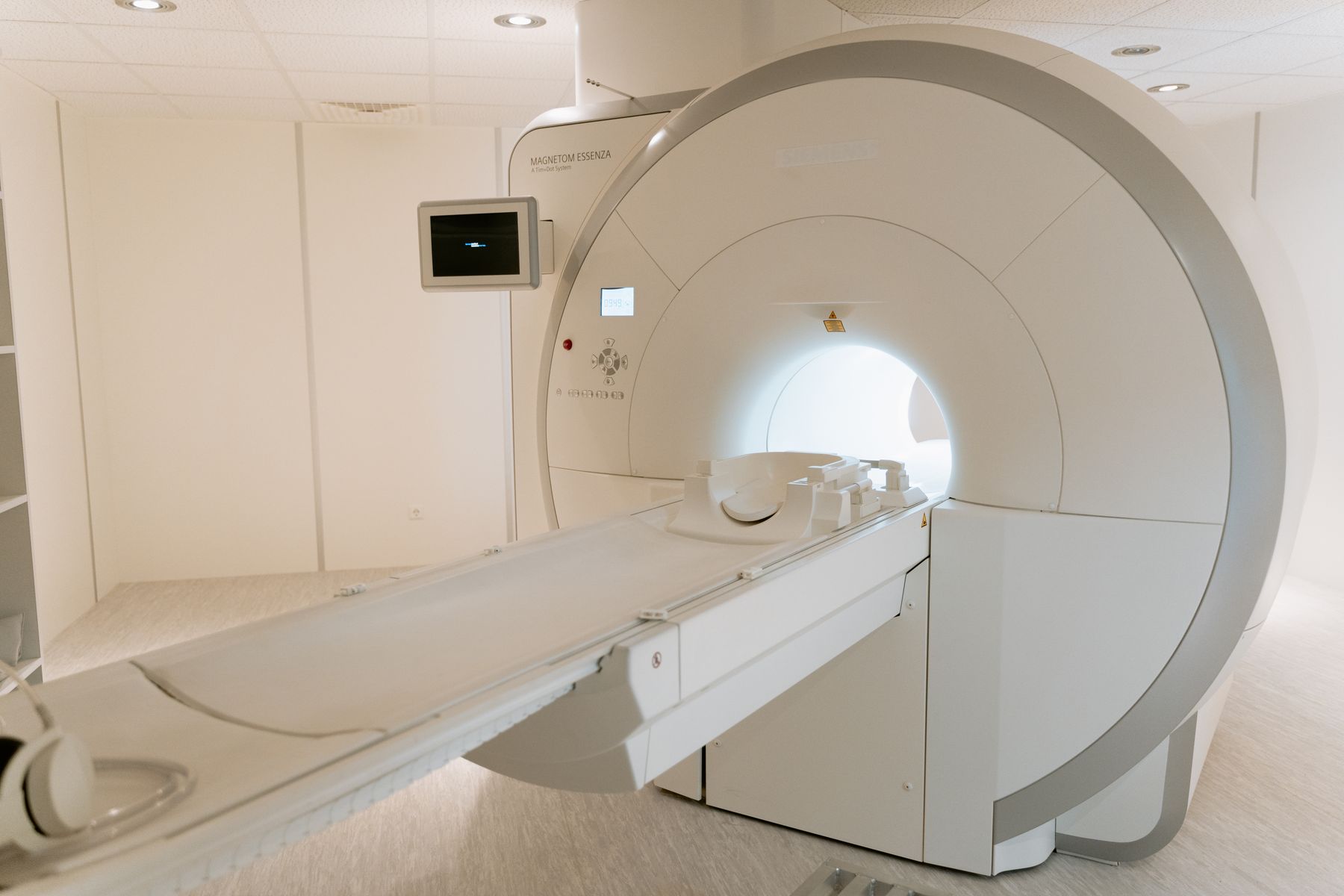
Researchers at Washington University in St. Louis, in the US, published a long-term study in npj Parkinson’s Disease in which the brains of 95 people with Parkinson’s were observed using a PET scanA scan that looks not at the shape of the brain but at how it is working. A substance that sticks only to whatever is being looked for is given a very weak radioactive label and injected, and the scanner images where in the brain it collects.Learn more. Using a tracer that shows the activity of acetylcholineOne of the substances that carry signals in the brain and nerves. Parkinson's is known as a shortage of dopamine, but the circuits that run on this substance weaken alongside it, and they are involved in memory, attention, visual processing and balance while walking.Learn more, they measured activity in the parts of the brain that process visual information — the thalamus, the occipital lobe and the temporal lobe among them.
In people who had visual hallucinationsThe umbrella term for hallucinations (seeing or hearing things that aren't there) and delusions in Parkinson's. Parkinson's medications are frequently the cause, and dementia or delirium can be too. Visual hallucinations are reported in 20–30% of people with Parkinson's.Learn more, acetylcholine activity in these areas was clearly lower than in those who did not, and the lower it was, the more severe the hallucinations. And there is one more finding that matters most — among those who had no hallucinations at the outset, the ones who went on to develop them two to six years later already had lower activity before any symptom appeared.
The result held after accounting for age, sex, how long someone had lived with Parkinson’s, thinking ability and whether dementia was present. The researchers said the measurement could serve as a way of gauging in advance whether hallucinations are likely to develop, or become a target for treatment aimed at those areas of the brain.
✅ For you
Seeing things that aren’t there is the kind of symptom people feel too embarrassed to mention, and so keep to themselves. But as this study shows, it is not something that happens because someone is fragile — it is a change taking place in the brain. Parkinson’s medication is sometimes the cause as well, which means that saying so opens up room to adjust it. The longer it stays hidden, the later anything can be done about it.
🙋 For your care partner
When hallucinations happen for the first time, it is usually the family who are more alarmed, and the instinct is to insist firmly that there is nothing there. After that, it stops being mentioned. Listening without alarm, then writing it down and passing it on at the appointment, is what helps most. It is a symptom that often improves with a change of medication.
Four things are enough when writing it down.
- When — the time of day, and in particular whether it clusters around dusk or at night
- What — whether it appeared as a person, an animal or an object
- How it was taken at the time — whether it was recognised as not being real, or believed to be real. This distinction carries a good deal of weight at the appointment
- Whether medication changed around then — note any dose adjustment or newly added medication alongside it
Hallucinations do not mean that dementia is around the corner. Left alone, though, they can grow more frequent, so flagging them early and adjusting medication tends to work out better.
What you can do now
Both stories point to before rather than after things get worse. If you are in the early years after diagnosis, ask at your next appointment when rehabilitation should start; if there is a symptom as hard to raise as hallucinations, write it down and pass it on as it happened. Both are things that can be started today.
This article is ParkinON’s plain-language summary of recently published research and news. It is not a substitute for medical diagnosis or treatment, and does not reflect approval or availability status in any specific country. Please talk to your care team about any questions regarding new treatments.