
Everything on this page is provincial. There is no Canadian home care programme, no national list of covered hours, and no entitlement that follows you across a provincial border. What there is, in every province, is a care coordinator with an assessment form — and what that form records is what you get.
That makes home care unlike the benefits covered elsewhere on this site. Nobody is checking whether you contributed enough or filed a tax return. Somebody is coming to your home to decide how much help you need, and the honest answer to that question depends on the day.
It also sits outside the federal programmes entirely. Canada’s federal disability benefits pays money into your account; nothing in it buys you an hour of personal care.
Nothing happens until somebody assesses you
A Parkinson’s diagnosis does not open a file anywhere. Neither does a neurologist’s letter on its own. The sequence is the same across the country even though the names change.
| Province | Who to contact |
|---|---|
| Ontario | Ontario Health atHome — a care coordinator carries out an in-person assessment |
| British Columbia | The home and community care office of your regional health authority — Fraser, Interior, Island, Northern or Vancouver Coastal |
| Quebec | Your CLSC — see Parkinson’s in Quebec |
| Elsewhere | Your provincial or territorial health authority’s home care or continuing care office |
You do not need a doctor to start it. In British Columbia you can contact the health authority yourself, and “health care professionals, such as a doctor, nurse, pharmacist or social worker, can also make a referral on your behalf.” If you are in hospital, ask your doctor, nurse or social worker to contact the home and community care office before you are discharged — a hospital discharge is one of the few moments the system moves quickly.
British Columbia’s baseline eligibility is worth quoting because it is representative: you must be a Canadian citizen, permanent resident or holder of a temporary resident permit; “be a resident of British Columbia for at least three months”; and “be 19 years of age or older.” Beyond that, “each service has its own needs assessment criteria that you must meet.”
What the assessment actually weighs
This is the part worth understanding before someone is sitting in your living room with a tablet.
British Columbia publishes what its assessment considers.
Read the middle item again. Availability of care partners is an input to how much help you are offered. A spouse who has quietly absorbed the dressing, the medication schedule and the night disturbances for two years is, in the arithmetic of the assessment, a support that is available. The household that is coping is the household that is offered less.
That is not a reason to misrepresent anything. It is a reason to describe the load accurately rather than modestly — including what it costs the person carrying it, and what happens on the days it does not work.
The fluctuation problem
Parkinson’s has a specific difficulty with a one-visit assessment: the answer depends on the hour.
An assessment scheduled for 10 a.m., ninety minutes after a levodopa dose, can watch you rise from a chair, walk to the kitchen and make tea. The same assessment at 4 p.m., or at 3 a.m. when you need to get to the bathroom, would record a different person. The form captures what the assessor sees.
If you are eligible, a health care professional works with you, your family and whoever helps you at home to develop a care plan, and services start according to how urgent your need is judged to be. Waiting lists are managed by the health authority.
What home care costs
Some of it is free and some of it is not, and the split is not intuitive. British Columbia’s summary: “Some publicly subsidized home and community care services are provided free of charge. For others, the cost is shared between the Ministry of Health and you.” Your client rate “may be based on your income or set as a fixed rate, depending on the home and community care service you receive.”
Home support in British Columbia — help with mobility, nutrition, lifts and transfers, bathing, dressing, grooming and toileting, sometimes with clean-up, laundry of soiled bedding and meal preparation — is charged by a daily rate. The rate is your remaining annual income multiplied by 0.00138889.
You pay nothing for home support if you receive:
- the Guaranteed Income Supplement, Spouse’s Allowance or Widowed Spouse’s Allowance
- Employment and Assistance support or shelter allowance
- the War Veterans Allowance
And if you have earned income, you will not pay “more than $300 per month for home support services.” You are also never charged more than the actual cost to the health authority.
Long-term care: two completely different bills
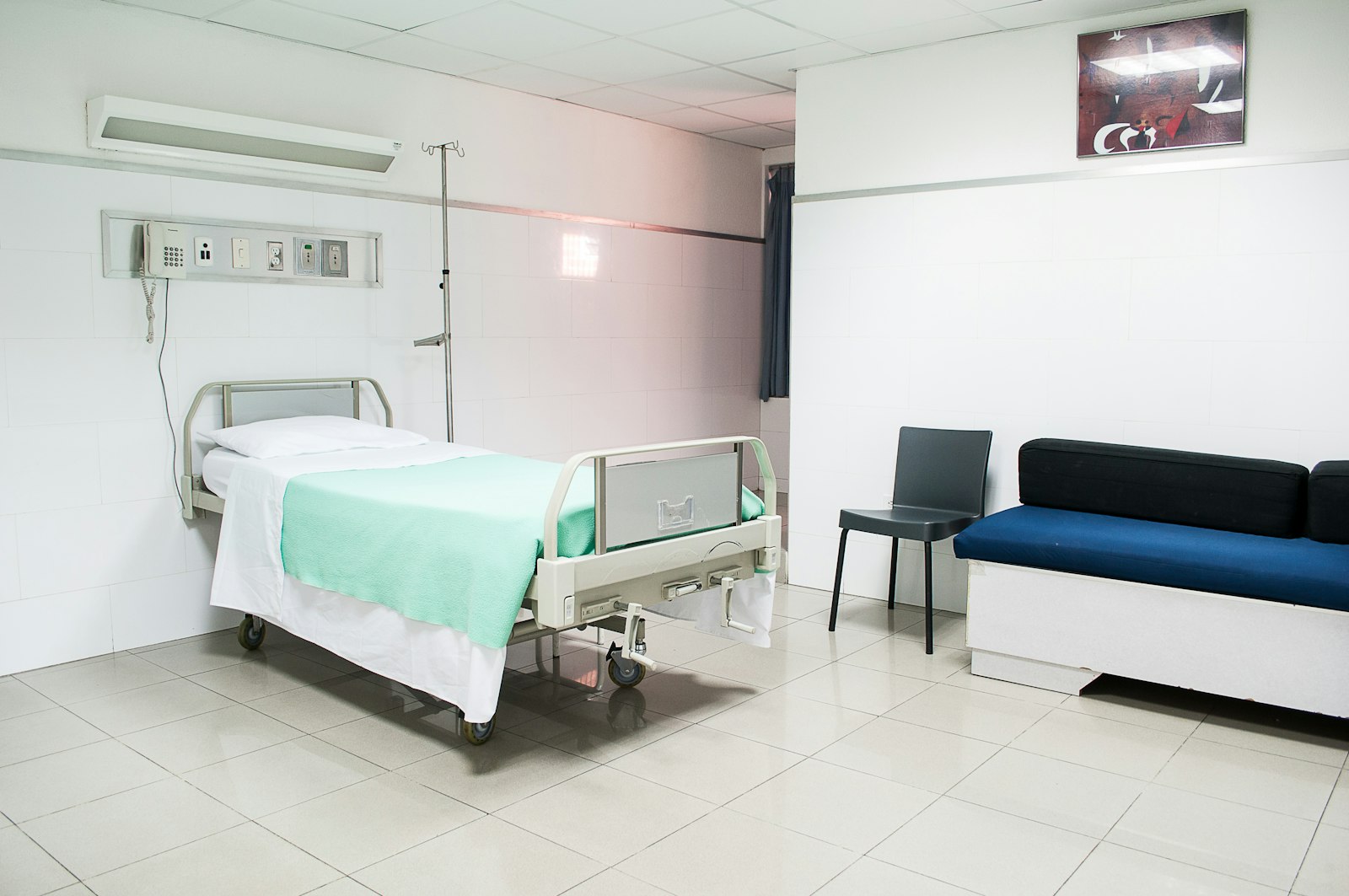
Compare how the two largest provinces charge for a bed and you will see why “what does long-term care cost in Canada” has no answer.
Ontario charges a flat co-payment, the same in every home in the province. Effective 1 July 2026:
| Accommodation | Daily | Monthly |
|---|---|---|
| Long-stay basic | $70.00 | $2,129.17 |
| Long-stay semi-private | $84.40 | $2,567.17 |
| Long-stay private | $100.01 | $3,041.97 |
| Short-stay | $45.31 | — |
Because the rate is flat, a low income does not reduce it automatically. Ontario runs a separate Rate Reduction Program for people in basic accommodation. The reduced monthly rate is calculated as annual net income divided by 12, minus a comfort allowance and any dependant deductions, with the comfort allowance currently $149 a month. At current rates a person with no dependant deductions “would likely qualify for a rate reduction if their income is less than $27,338.”
Two deadlines attach to it, and both are easy to lose in the month somebody moves into a home:
- Apply within 90 days of moving in
- Re-apply every year, between 1 July and 28 September
British Columbia charges a percentage of your income instead. The monthly client rate is calculated one of two ways: if your after-tax income is under $19,500 a year, after-tax income minus $3,900, divided by 12; if it is $19,500 or more, “after tax income multiplied by 80 per cent and divided by 12.” The $3,900 deduction — $325 a month — is what you are left to live on. There is a minimum rate, adjusted each 1 July in line with Old Age Security and the Guaranteed Income Supplement, and a maximum rate adjusted yearly by the Consumer Price Index.
What that rate buys in British Columbia is standard accommodation, meals including therapeutic diets, laundry, hygiene supplies, routine medical supplies, a basic wheelchair with maintenance, recreation and the contracted care. What costs extra is cable, telephone, premium nutrition supplements, hearing aids, personal transportation, specialised wheelchairs and companion services. Which devices are funded, and which you pay for, is covered in walkers, wheelchairs and what Canada will pay for.
Who qualifies for a bed
British Columbia’s criteria describe someone who “can no longer be cared for in their own homes or in an assisted living residence” and who needs 24-hour professional nursing supervision that cannot be met where they are. The criteria include severe behavioural problems, moderate to severe cognitive impairment, significant physical dependency requiring professional nursing, or a clinically complex condition.
Several of those describe later Parkinson’s directly — cognitive change, hallucinations, the physical dependency that arrives when transfers stop being safe. If a placement conversation has started, it is usually because more than one criterion is now in play, and it is worth asking the assessor which ones they are recording.
The waitlist rules that can undo months of waiting
This is where the two provinces diverge most sharply, and Ontario’s rule is severe enough to plan around.
| Ontario | British Columbia | |
|---|---|---|
| Homes you can list | up to 5, in order of preference | up to 3 |
| Time to accept an offer | 24 hours | 48 hours for a preferred home, 72 hours for interim placement |
| Time to move in | up to 5 days | — |
| If you decline | “you will be removed from every waiting list you’re on,” then 12 weeks before you can reapply | Interim care may be offered; you keep your original waitlist position and date |
| How the queue is ordered | — | Wait time is the primary criterion, with exceptions for intolerable risk and for reuniting spouses |
Ontario’s penalty is not a fine, it is a reset. Decline the offer, or miss the five-day move-in window, and every list you are on drops you — unless “there is a significant change in your condition or circumstances.” Payment starts on your move-in date “regardless of when you arrive.”
British Columbia’s interim placement rule is the mirror image and worth knowing about: if no bed is free in a home you chose, you can be offered temporary care elsewhere while keeping your original position and date on the preferred list.
Respite is a service you have to ask for by name
Care partner exhaustion is not a side issue in Parkinson’s — it is one of the main reasons a household moves from home care to long-term care earlier than it needed to. British Columbia lists respite and relief, adult day services and short-stay services among its care options, alongside home support, community nursing and community rehabilitation.
None of these appear unless you raise them. When the care plan is being written, ask explicitly what is available for the person doing the caring, not only for the person with the diagnosis.
If this applies to you
| Your situation | What to do |
|---|---|
| You have a diagnosis but no services | Contact Ontario Health atHome, your BC health authority, or your CLSC directly. A diagnosis alone allocates nothing |
| You have just moved provinces | Ask about the residency requirement immediately. British Columbia requires three months’ residency for subsidised care |
| Your assessment is booked for your best time of day | Say so, and ask for a time that reflects your harder hours. Bring two weeks of written notes either way |
| Your family has been coping without help | Describe the load accurately. The help already available to you at home is an input to what you are offered |
| Your needs have grown since the last assessment | Ask for a reassessment. Nothing re-runs automatically |
| You are worried you cannot afford home support in BC | Check the exemptions first — GIS, income assistance and War Veterans Allowance mean no daily rate — then ask about hardship relief |
| Someone has just moved into an Ontario long-term care home | Apply for the Rate Reduction Program within 90 days, and diarise the 1 July to 28 September renewal every year afterwards |
| You are on an Ontario long-term care waitlist | Decide in advance which homes you would accept. You get 24 hours, and refusing removes you from every list for 12 weeks |
| A specialised wheelchair is part of daily life | Ask before the move who pays for it in a care home. Basic chairs are included in BC; specialised ones are not |
| You are the one doing the caring | Ask by name about respite, adult day services and short-stay care when the care plan is written. On the tax side, see the tax money most people leave behind |
This page is not medical, tax or legal advice and does not decide your entitlement. Figures were checked in August 2026: Ontario’s long-term care accommodation rates are effective 1 July 2026, and British Columbia’s rates are adjusted each year. Rules differ in every province and territory — confirm your own position with your provincial home and community care office and your care team.